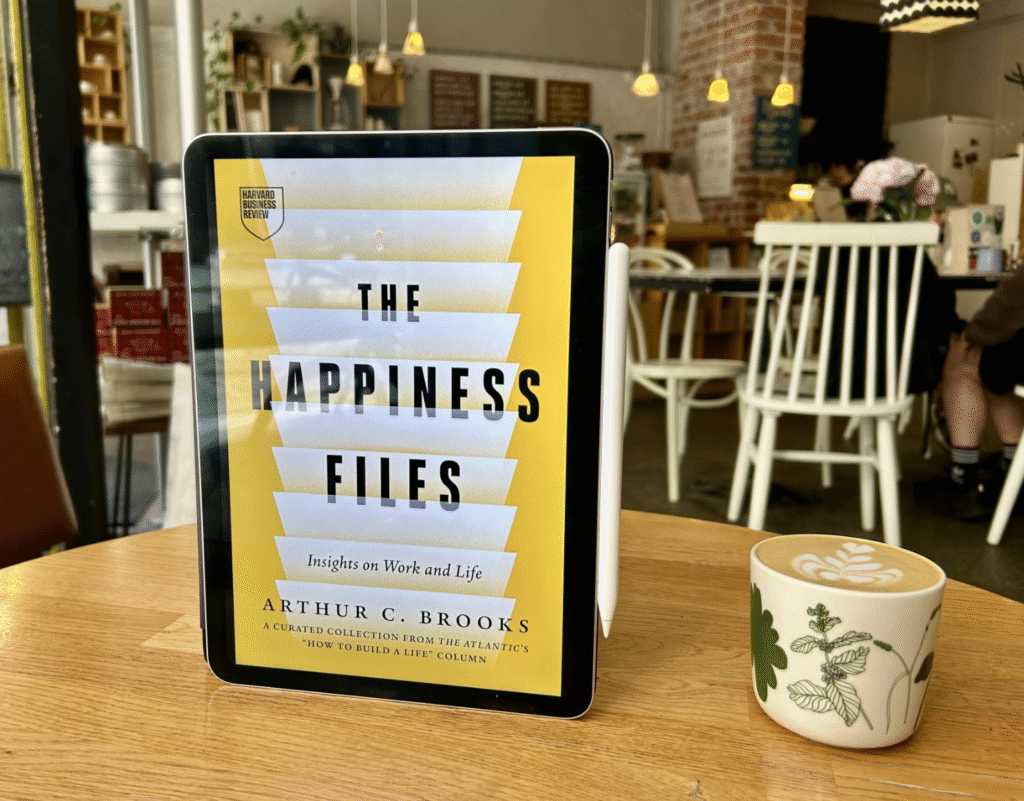

What if your life’s biggest management challenge isn’t running a business, leading a team, or climbing the corporate ladder—but managing your own happiness?
That’s the radical premise Harvard Business School professor and social scientist Arthur C. Brooks puts forward in The Happiness Files: Insights on Work and Life, a transformative collection that turns conventional wisdom about success on its head. Drawing from his wildly popular weekly column “How to Build a Life” in The Atlantic and his oversubscribed Harvard Business School course on leadership and happiness, Brooks offers 33 scientifically grounded essays that promise to help you build not just a successful life, but a genuinely happy one.
What The Happiness Files Teaches Us About Life as a Start-Up
Brooks introduces a compelling metaphor that reframes how we think about our lives: treat your life like a start-up, where you are the founder, entrepreneur, and chief executive. This isn’t about hustling harder or accumulating more worldly rewards. Instead, it’s about understanding that your life is the most important management task you will ever undertake.
The book dismantles a pervasive myth—that chasing money, power, pleasure, fame, or prestige will lead to happiness. Research shows our grandmother was right: money doesn’t buy happiness (at least not beyond meeting basic needs). Mother Nature programmed us to accumulate resources for survival and gene propagation, but she doesn’t care about our happiness—that’s our responsibility.
The right “denomination of rewards” for an entrepreneurial life, Brooks argues, is happiness itself: love, enjoyment, satisfaction, and meaning. Since we’re naturally distracted by worldly resources, living happily requires staying fully awake to our mistakes and living intentionally, not just according to how we feel.
Core Insights: Five Pillars for Building Your Happiest Life
The Happiness Files is organized into five strategic sections, each addressing a critical dimension of happiness at work and in life:
Part One: On Managing Yourself
The foundation of happiness begins with self-management. Brooks emphasizes that you are your most important employee—you need to set boundaries, treat yourself with respect, and learn to act according to your values rather than fleeting emotions.
Key chapters explore how to succeed at failure (learning from setbacks rather than being crushed by them), stop wasting time on activities you hate, combat burnout by creating boundaries between work and life, and strategically procrastinate creative work while tackling mundane chores immediately. Perhaps most powerfully, Brooks teaches readers to say “no” more often, manage worry by writing it down, and understand that a bit of restraint—not radical authenticity—can lead to greater happiness.
One striking insight: chronic worrying about money often disguises deeper anxieties about self-worth. Once you’ve met basic needs, riches won’t help you feel better about yourself. The data shows that 91 percent of things people worry about never come to pass—meaning chronic worriers suffer for 10 things when only one actually happens.
Part Two: On Jobs, Money, and Building Your Career
Happiness in your career doesn’t come from arriving at a destination (a certain salary, title, or retirement), but from making tangible progress toward meaningful goals. This is one of Brooks’ most counterintuitive findings: humans get satisfaction not from achievement, but from forward momentum.
Brooks explores the happiest way to change jobs (treating work as something you control rather than something that controls you), why trusting your gut matters in decision-making, and how to buy happiness with your discretionary income—by investing in experiences with loved ones, buying back time, and giving generously.
He also tackles the “midlife crisis” with fresh perspective, offering two crucial choices: focus on what age gives you (crystallized intelligence, pattern recognition, teaching ability) rather than what it takes away, and embrace subtraction over addition. The section includes Schopenhauer’s advice for achieving great things: keep the grand plan in mind, live in “day-tight compartments” without obsessing over the future, and block out irrelevant noise.
Part Three: On Communicating and Connecting with Others
Humans rarely work alone, and even rarer can be happy doing so. This section covers essential skills for maintaining healthy relationships through honest, open communication—especially challenging in today’s remote and hybrid work environments.
Brooks tackles how to give and receive criticism well (bad reviews feel terrible, but using them lightens your load), how to give genuine compliments, why meetings are miserable and how to fix them, and the trouble with endless Zoom calls. There’s even a chapter on “mindful cursing”—swearing can make you happier when done for the right reasons.
The art of influence emerges as a central theme: the key to persuasion isn’t forceful argument but listening sincerely to what people have to say. Brooks references early Christians, whose love for one another—even enemies—ultimately converted the Roman Empire, not through violence but through the power of values offered as gifts, not weapons.
Part Four: On Balancing Work, Life, and Relationships
For busy, ambitious people, family and friendship relationships often become “desiccated and malnourished,” leading to profound unhappiness. Brooks calls work-life balance a misnomer—it’s really about work-life integration, with the understanding that life’s greatest returns come from the strength of intimate ties.
This section draws on Carl Jung’s five pillars of a good life: health, occupation, family and friends, beauty and culture, and philosophy or religion. Brooks provides 10 practical ways to improve happiness immediately, from investing in family and friends to joining clubs, staying mentally and physically active, practicing your religion or spiritual path, and experiencing nature regularly.
A particularly reassuring chapter addresses parenting anxiety: research shows parents have less effect on their children’s outcomes than they think, but their love makes children genuinely happy. The section also covers how to identify “frenemies” (people who pose as allies but make you literally sick), avoid snap judgments based on first impressions, and handle romantic relationships that hit rough patches.
Part Five: On How You Define Success
The final section confronts a painful paradox: achieving a goal and achieving happiness are entirely different. Brooks explains why success can feel so bitter (Olympic athletes winning gold and feeling empty), why you might want to toss out your trophies (mementos can make you feel like a has-been), and why smart people often end up miserable (using intelligence merely as a tool to get ahead).
The book culminates with perhaps its most important message: if you want success, pursue happiness first. Chasing achievement to get happier is a fool’s errand. The causality runs the opposite direction—working on your happiness gives you the best chance at both happiness and success.
Brooks explains that high achievers often double their salary expecting lasting satisfaction, only to see their happiness bump fade within four years. Meanwhile, happy people tend to be more attractive to others, more productive, and more successful across multiple life domains including marriage, friendship, health, and income.
Why You Should Read The Happiness Files
This book is for anyone who feels overwhelmed, burned out, or stuck in the trap of believing that the next promotion, raise, or achievement will finally bring contentment. It’s especially valuable for ambitious professionals who’ve climbed the ladder only to wonder why success feels hollow, leaders and managers who want to foster happier and more productive teams, midlife strivers navigating transitions, and anyone seeking meaning beyond material success.
Brooks’ writing style strikes a perfect balance between academic rigor and accessibility. Each essay begins with sharp observations and behavioral science research, then transitions to practical, actionable advice you can implement immediately. The tone is warm and conversational, like getting life advice from a brilliant, funny friend who happens to have read thousands of peer-reviewed studies so you don’t have to.
Readers consistently praise the book’s blend of neuroscience, social psychology, and behavioral economics with real-world wisdom. The pacing works beautifully—33 self-contained essays mean you can read straight through or dip in based on what you’re struggling with right now.
The Science Behind the Smile
What sets The Happiness Files apart from generic self-help books is Brooks’ unwavering commitment to empirical truth. As a behavioral scientist and Harvard professor, he grounds every assertion in peer-reviewed scholarship, experiments with human subjects, and top-quality survey data.
You’ll learn fascinating insights from the research: that moderate procrastination actually boosts creativity, that about 90 percent of Americans never experience a true “midlife crisis,” that exercising after watching comedy makes people 12 percent more productive, and that chronic worriers have a genetic variant affecting how they process stress hormones.
But Brooks doesn’t bury readers in academic jargon. Instead, he weaves research seamlessly into compelling narratives, making complex findings both understandable and memorable.
A Timely Message for Our Moment
Brooks notes that American happiness has been declining since 1990, with the trend accelerating dramatically since 2008. We’re living through what he calls a “happiness crisis”—despite rising wealth, longer lifespans, and more opportunities than ever, millions feel anxious, disconnected, and unfulfilled.
The Happiness Files offers a roadmap out of this crisis—not through wishful thinking, but through concrete, research-validated strategies for building the four pillars of happiness: family, friendship, work, and faith understood broadly as transcendent purpose.
As Brooks emphasizes, happiness is not a destination but a direction. You can’t “arrive” at happiness and stop working on it. Instead, the goal is “happierness”—continuous progress toward a life of greater love, meaning, and satisfaction.
If This Story Speaks to Your Curiosity
Whether you’re a burned-out executive, an anxious graduate student, a midlife professional reassessing priorities, or simply someone who suspects there’s more to life than the treadmill of achievement, The Happiness Files offers wisdom for the journey ahead.
Brooks teaches that you don’t have to choose between success and happiness—you just have to reverse the order of operations. Start with happiness, and success often follows. Start with success, and happiness may never arrive.
The book’s greatest gift might be permission: permission to prioritize relationships over résumé lines, to say no to opportunities that drain you, to redefine success on your own terms, and to recognize that a good life is not uniformly positive—it includes failure, regret, and struggle, all of which can become sources of growth and wisdom when approached with the right mindset.
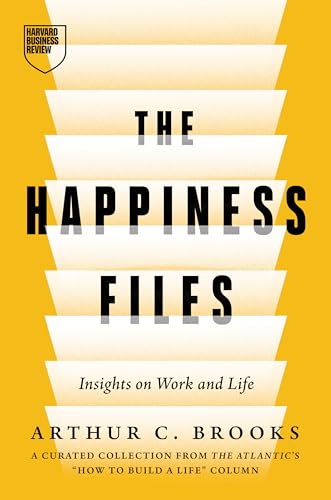
If this exploration of happiness science resonates with you, grab your copy of The Happiness Files: Insights on Work and Life by Arthur C. Brooks today—available on Amazon. Start building the life you actually want, guided by decades of research and the wisdom of one of the world’s leading happiness experts.