
Have you ever felt like you’re working hard but still falling short? Like despite all your efforts at self-improvement, something fundamental is still missing? You’re not alone. Stephen R. Covey spent decades wrestling with that exact feeling—and what he discovered changed millions of lives.
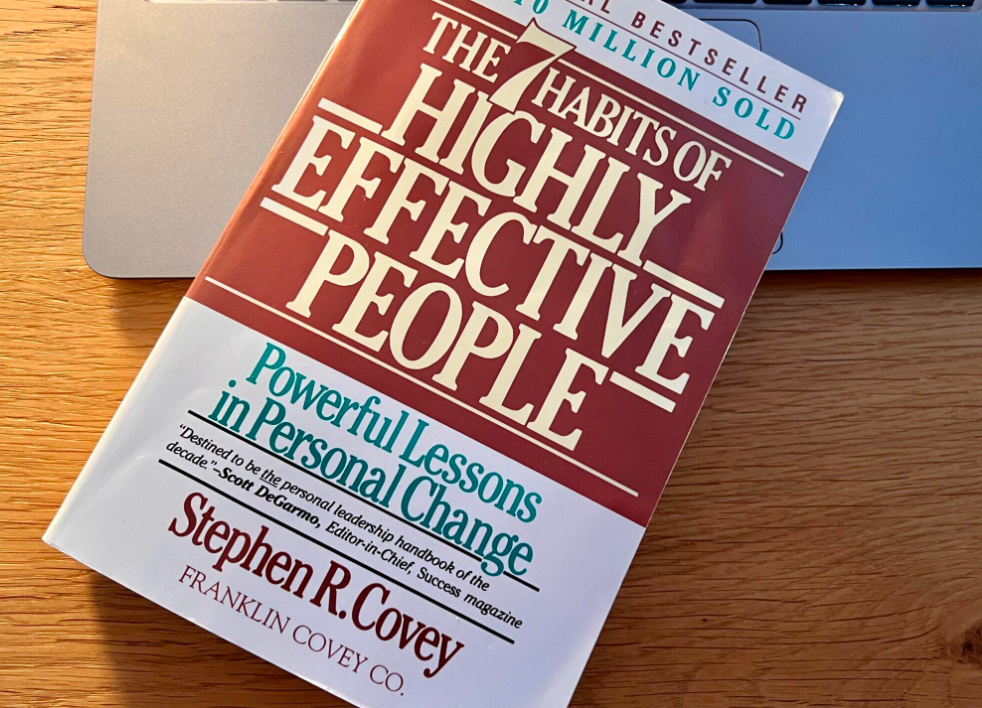
The 7 Habits of Highly Effective People by Stephen R. Covey isn’t just another self-help book promising quick fixes and easy answers. It’s a principle-centered approach to personal and professional transformation that cuts to the root of what makes human beings truly effective. First published in 1989, this landmark work has sold over 40 million copies worldwide and continues to shape how we think about success, relationships, and personal growth.
The Foundation: Character Over Personality
Covey begins with a paradigm shift that sets this book apart from most self-help literature. After studying 200 years of success literature, he noticed something profound: the first 150 years focused on the Character Ethic—integrity, humility, courage, justice, patience—while the last 50 years shifted to the Personality Ethic, emphasizing techniques, quick fixes, and social Band-Aids.
The problem? You can’t achieve lasting success with superficial personality changes when your character is fundamentally flawed. It’s like trying to use a map of Detroit to navigate Chicago. No matter how positive your attitude or how hard you work, you’ll end up lost because you’re using the wrong map.
Covey introduces the “inside-out” approach: start with yourself, with your paradigms, your character, and your motives. Private victories must precede public victories. You can’t build healthy relationships with others until you’ve built integrity within yourself.
The Seven Habits: A Progressive Framework
The seven habits form an integrated sequence that moves you progressively from dependence to independence to interdependence:
Private Victory: Habits 1-3
Habit 1: Be Proactive is about taking responsibility for your life. Between stimulus and response, you have the freedom to choose. Viktor Frankl discovered this truth in Nazi concentration camps—even when everything external was taken from him, he retained the power to choose his response. Proactive people focus on their Circle of Influence rather than their Circle of Concern, working on things they can control.
Habit 2: Begin with the End in Mind asks you to envision what you want said about you at your funeral. This isn’t morbid—it’s clarifying. What kind of person do you want to be? What contributions do you want to make? Writing a personal mission statement based on principles and values becomes your personal constitution, the foundation for making daily decisions.
Habit 3: Put First Things First is about execution and discipline. Once you know your values and vision, you must manage yourself effectively to live congruently with them. Covey introduces the Time Management Matrix, urging us to focus on Quadrant II activities—things that are important but not urgent, like relationship building, planning, and prevention.
Public Victory: Habits 4-6
Habit 4: Think Win/Win challenges the scarcity mentality that says “if you win, I lose”. True effectiveness in interdependent reality requires an Abundance Mentality—the paradigm that there’s plenty for everybody. Win/Win seeks mutually beneficial solutions, building trust and creating synergy.
Habit 5: Seek First to Understand, Then to Be Understood emphasizes empathic listening. Most people don’t listen with the intent to understand; they listen with the intent to reply. Diagnose before you prescribe. When you truly understand another person’s perspective, you build trust and create the foundation for authentic influence.
Habit 6: Synergize is the culmination of the other habits. When you combine proactive behavior, principled living, Win/Win thinking, and empathic communication, you create synergy—where the whole becomes greater than the sum of its parts. Creative cooperation opens new possibilities and third alternatives.
Renewal: Habit 7
Habit 7: Sharpen the Saw is about balanced self-renewal in four dimensions: physical, mental, social/emotional, and spiritual. Covey uses Aesop’s fable of the goose and the golden egg to illustrate the P/PC Balance—production and production capability. You can’t neglect the goose while harvesting golden eggs, or you’ll soon have no capacity to produce at all.
Key Concepts That Make This Book Transformative
Paradigm Shifts: Covey demonstrates through perception exercises how our paradigms—our mental maps—shape everything we see and do. The young woman/old woman optical illusion shows that two people can look at the same facts and see completely different realities. Changing our paradigms changes our behavior at the source.
The Emotional Bank Account: Every interaction either deposits to or withdraws from the Emotional Bank Account in our relationships. Kindness, keeping commitments, and genuinely understanding others make deposits. Discourtesy, breaking promises, and selfishness make withdrawals. High trust creates the foundation for effective interdependence.
Circle of Influence vs. Circle of Concern: Proactive people focus their energy on their Circle of Influence—things they can do something about—which expands that circle. Reactive people focus on their Circle of Concern—things outside their control—which shrinks their influence and makes them feel victimized.
Why You Should Read This Book Today
The 7 Habits of Highly Effective People speaks to anyone who feels the disconnect between where they are and where they want to be. If you’re a professional struggling with work-life balance, a parent wanting to build stronger family relationships, a leader seeking to inspire your team, or simply someone committed to personal growth, this book offers timeless wisdom.
What sets Covey’s work apart is its foundation in universal principles rather than quick techniques. The habits aren’t personality tricks or manipulation tactics—they’re principle-centered practices that align with natural laws governing human effectiveness. You can’t fake integrity or shortcut character development any more than you can cram at harvest time after playing all summer.
The book is rich with real-world examples from Covey’s consulting work, his family life, and history. His story of changing his perception of his struggling son demonstrates the power of paradigm shifts. His account of working with organizations shows how Win/Win systems create synergistic cultures.
Reading this book requires reflection and application. Covey doesn’t just want you to understand the habits intellectually—he challenges you to internalize them through practice. The exercises invite deep self-examination: What are your values? What’s your mission? Where do you focus your energy? How do you treat people?
The Lasting Impact
Three decades after publication, The 7 Habits remains profoundly relevant because it addresses the timeless challenges of human nature and interpersonal relationships. In our age of constant distraction, instant gratification, and superficial connection, Covey’s call to character-based effectiveness resonates even more powerfully.
This isn’t a book you read once and shelve. It’s a manual for life that you’ll return to again and again as you face new challenges and reach new levels of maturity. Each reading reveals deeper insights because you bring a more developed self to the reading.
The habits are sequential and synergistic—each builds on the previous ones and amplifies the others. But they’re also a lifetime journey. No one masters all seven habits perfectly. The goal is continuous improvement, the upward spiral of growth that comes from aligning your life with correct principles.

If this exploration of effectiveness, character, and principle-centered living speaks to your deepest aspirations, grab your copy of The 7 Habits of Highly Effective People today. It’s available on Amazon, where you’ll find both the original edition and the updated Infographics Edition. This investment in your growth will pay dividends across every dimension of your life—personal, professional, relational, and spiritual.