
What if the only thing standing between you and your greatest potential isn’t lack of talent, resources, or opportunity—but the comfortable lies you tell yourself?
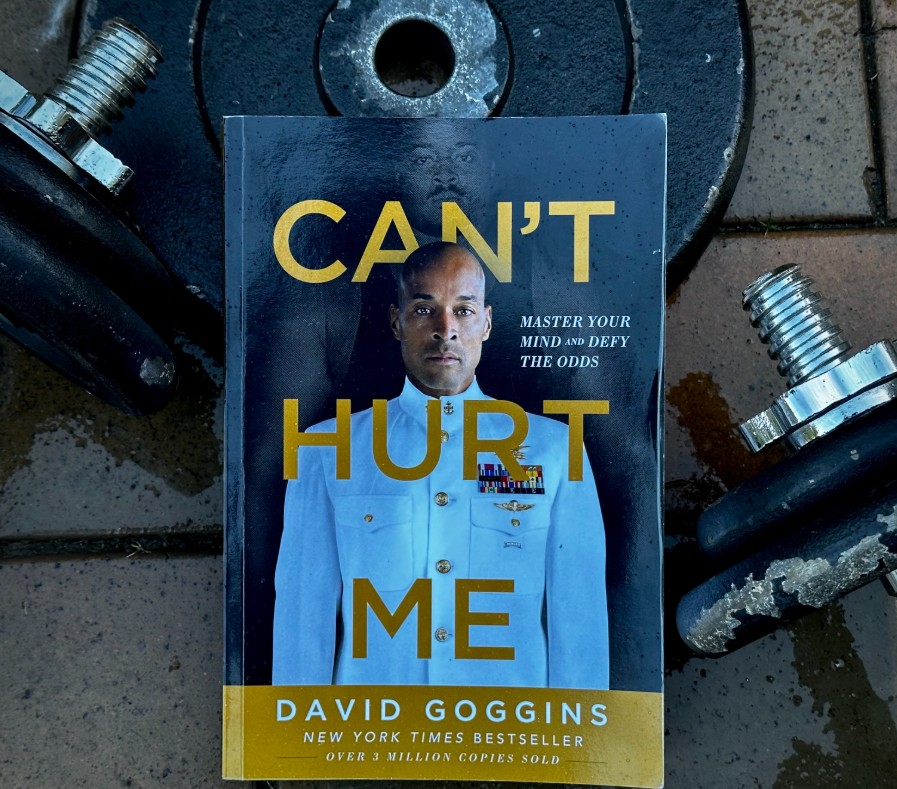
David Goggins, a retired Navy SEAL and ultra-endurance athlete, asks this question with the force of a sledgehammer in Can’t Hurt Me: Master Your Mind and Defy the Odds. This isn’t your typical self-help book filled with gentle affirmations and easy fixes. This is a raw, unfiltered memoir that reads like a survival manual for the human spirit.
The Journey from Hell to Hero
Goggins opens the door to a childhood that most would consider insurmountable. Born into an abusive household in Buffalo, New York, young David worked night shifts at his father’s roller skating rink, Skateland, where he and his brother cleaned toilets and organized skates until dawn before heading to school. His father, Trunnis Goggins, ruled with violence and terror, beating David and his mother regularly while operating side businesses that included illegal activities.
The abuse wasn’t limited to home. After escaping to Brazil, Indiana with his mother, David faced relentless racism in a small rural town. He received death threats at school, was called racial slurs by grown men who pointed guns at him, and struggled academically because of undiagnosed learning difficulties stemming from childhood trauma. By his own admission, he cheated his way through school, unable to focus or learn due to toxic stress that had rewired his young brain.
Fast forward to his early twenties: David Goggins weighed nearly 300 pounds, worked as a pest control exterminator, and was trapped in a life going nowhere. Then everything changed when he saw a documentary about Navy SEAL training. In that moment, watching the world’s toughest warriors push through Hell Week, something clicked. He decided to transform himself completely—to go from the “weakest piece of shit on the planet” to one of the hardest men alive.
The Impossible Task: Losing 106 Pounds in Three Months
What makes Goggins’ story so compelling isn’t just that he decided to change—it’s how he did it. When a Navy recruiter told him he’d need to lose over 100 pounds in three months to qualify for SEAL training, most people would have walked away. Goggins attacked the challenge with methodical brutality.
He designed a punishing daily routine: waking at 4:30 AM to study for the military entrance exam (which he’d already failed twice), then spending two hours on a stationary bike, followed by a two-hour swim, a full circuit workout, and another two hours on the bike. He ate one small meal per day—grilled chicken, vegetables, and a thimble of rice. Within weeks, he’d dropped 25 pounds. Within three months, he’d lost 106 pounds and passed the entrance requirements.
But the weight loss was just the beginning. Goggins went through Navy SEAL training three times, completing the infamous Hell Week on each attempt due to injuries and setbacks. He became the only person in history to complete elite training in three branches: Navy SEALs, Army Ranger School, and Air Force Tactical Air Controller training.
The 40 Percent Rule: Unlocking Your Hidden Reserves
The centerpiece of Can’t Hurt Me is what Goggins calls The 40 Percent Rule—arguably the book’s most powerful concept.
During an ultramarathon called the Hurt 100 in Hawaii, Goggins discovered something extraordinary about human capability. When his body screamed for him to quit at mile 40, when every instinct told him he had nothing left, he realized his mind was lying. He writes: “When your mind is telling you you’re done, you’re really only 40 percent done”.
This isn’t motivational fluff. Goggins tested this theory repeatedly in the most extreme conditions imaginable. During the Badwater 135—a 135-mile race through Death Valley in July, where temperatures exceed 130°F—he pushed past blistered feet, dehydration, and hallucinations to finish in the top ranks. When he ran the San Diego One Day ultramarathon with zero training, he completed 101 miles despite developing stress fractures, broken bones, and kidney failure.
The 40 Percent Rule challenges everything we believe about our limitations. It suggests that when we think we’ve given everything we have, we’ve barely scratched the surface of what’s possible.
The Accountability Mirror: Facing Your Truth
Another transformative tool Goggins introduces is the Accountability Mirror. After failing the military entrance exam twice and realizing he’d wasted years cheating through school without actually learning anything, Goggins stood before his bathroom mirror and confronted brutal truths about himself.
He placed Post-it notes around the mirror listing all his weaknesses, fears, and goals. Each morning, he forced himself to acknowledge these truths—no sugar-coating, no excuses. “I’m dumb. I need to study harder. I’m fat. I need to work out,” he would tell himself.
This practice sounds harsh, even cruel. But Goggins argues that we need this kind of honesty to grow. “The dirty mirror you see every day is going to reveal the truth,” he writes. “Stop ignoring it. Use it to your advantage”. The Accountability Mirror became his daily reality check, preventing him from slipping back into comfortable self-deception.
Callousing the Mind: Building Unbreakable Mental Toughness
Throughout the book, Goggins emphasizes that mental toughness isn’t innate—it’s built through deliberate exposure to discomfort. He calls this process “callousing the mind,” comparing it to how your hands develop calluses from hard physical labor.
Every time Goggins chose the harder path—running in freezing rain, training in a sauna suit in Death Valley heat, doing multiple Hell Weeks—he was building mental calluses that would serve him when he needed them most. When depression threatened to swallow him during his extreme weight loss, when racism tried to define his identity, when injuries told him to quit, those calluses protected him.
The concept applies beyond extreme athletics. Goggins argues that modern life has become so comfortable that most people never develop the mental resilience needed to handle real adversity. We avoid discomfort, seek shortcuts, and give up at the first sign of difficulty. By intentionally seeking out challenges and pushing through pain, we prepare ourselves for the inevitable hardships life will throw our way.
The Cookie Jar: Drawing Strength from Past Victories
When suffering becomes unbearable during a race or challenge, Goggins reaches into what he calls his Cookie Jar—a mental collection of past victories and moments when he overcame the impossible.
Struggling at mile 100 of Badwater with swollen feet and muscle failure? He’d remember the time he completed Hell Week on a broken leg. Wanting to quit during a grueling training session? He’d recall escaping his abusive father or surviving racism in Indiana. These memories became fuel, proof that he’d endured worse and could endure this too.
The Cookie Jar is deeply personal. Your victories don’t need to match Goggins’ extreme accomplishments. Maybe you overcame a difficult breakup, finished a challenging project, or stood up to a bully. Whatever it is, these moments prove you’re stronger than you think, and you can draw on them when you need extra motivation.
Why You Should Read This Book
Can’t Hurt Me isn’t for everyone. Goggins’ voice is raw, profane, and unapologetically intense. He doesn’t offer easy solutions or gentle encouragement. Instead, he presents a challenge: stop making excuses, stop living at 40 percent, and start going to war with yourself to become the person you’re capable of being.
This book will resonate with you if:
- You feel stuck in comfortable mediocrity and know you’re capable of more
- You’ve faced adversity and need a reminder that your past doesn’t define your future
- You’re tired of motivational content that offers temporary inspiration but no lasting change
- You’re willing to do the brutal work of honest self-examination and transformation
- You’re an athlete, entrepreneur, or anyone pursuing a challenging goal and need strategies for mental toughness
The audiobook version is particularly powerful, as it includes conversations between Goggins and the co-author that provide additional context and challenges for readers to complete.
Final Thoughts: There Is No Finish Line
One of the most profound messages in Can’t Hurt Me comes near the end, when Goggins finishes Badwater 135 and realizes something crucial: “There is no finish line”.
The work of self-improvement, mental toughness, and pushing beyond limits isn’t a destination you reach and then coast. It’s a daily practice, a lifelong commitment to staying hard, facing truth, and refusing to accept less than your best effort.
David Goggins’ story proves that transformation is possible for anyone willing to embrace suffering, face their demons, and callous their mind against the voice that says “quit.” You don’t need to run ultramarathons or join the Navy SEALs. But you can apply his principles to overcome your own obstacles, break through your self-imposed limitations, and discover what you’re truly capable of achieving.
The question isn’t whether you have the capacity for greatness—Goggins proves we all do. The question is whether you’re willing to do what it takes to access it.
If this story speaks to you, grab your copy of Can’t Hurt Me: Master Your Mind and Defy the Odds by David Goggins today—available on Amazon and wherever books are sold.