
What if Everything You Learned About Intelligence Was Wrong?
Close your eyes and picture the smartest person you know. What made them come to mind? Was it their perfect SAT score? Their ability to solve complex equations? Their razor-sharp vocabulary?
Now picture a world-class violinist performing a breathtaking concerto, or a surgeon whose hands move with balletic precision, or a leader who seems to read a room’s emotional temperature with uncanny accuracy. Are they not equally intelligent?
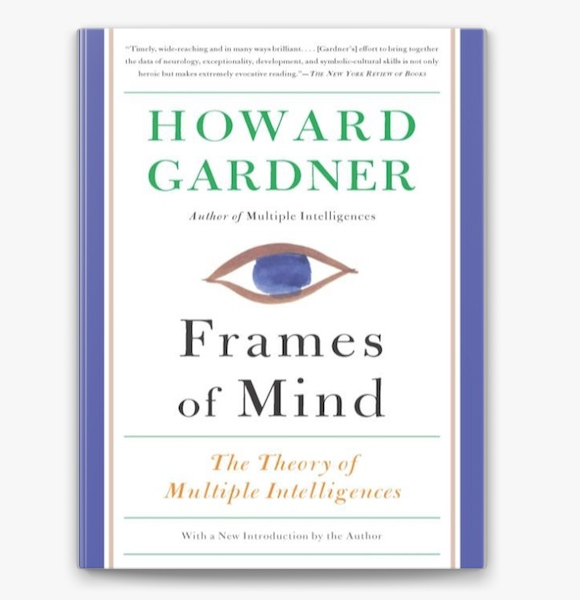
This is the question that Harvard psychologist Howard Gardner dared to ask in 1983, when he published Frames of Mind: The Theory of Multiple Intelligences—a book that would go on to revolutionize how we think about human potential, reshape educational systems worldwide, and challenge one of psychology’s most entrenched assumptions: that intelligence is a single, measurable thing.
For anyone who has ever felt dismissed by a test score, anyone who struggled in school despite obvious talents elsewhere, or anyone who has watched a child’s unique gifts go unrecognized—this book is a revelation. It’s also a call to action.
The Revolution Behind the Theory
When Gardner began his research in the late 1970s, the psychology world was dominated by a simple, almost tyrannical idea: intelligence could be reduced to a single number—your IQ. This number, derived from brief paper-and-pencil tests, would allegedly predict your academic success, your career potential, even your worth as a thinker.
But Gardner, working at Harvard’s Project Zero and studying both brain-damaged patients and exceptional individuals, noticed something the IQ tests couldn’t explain. He encountered people who had lost their ability to speak after a stroke yet could still compose music. He studied children who couldn’t read but could navigate complex social situations with extraordinary skill. He examined cultures where memorizing thousands of clan names or navigating by stars were considered the pinnacle of intelligence.
The evidence was overwhelming: intelligence isn’t one thing. It’s many things.
In Frames of Mind, Gardner doesn’t just critique the old model—he builds an entirely new framework. Drawing from neurology, evolutionary biology, cross-cultural studies, and developmental psychology, he identifies seven distinct forms of intelligence (later expanded to eight). Each operates on its own logic, develops on its own timeline, and can exist in relative isolation from the others.
This wasn’t just academic theorizing. It was a fundamentally democratic vision of human ability.
The Eight Intelligences: A New Map of the Mind
Gardner’s framework gives us a radically expanded view of what it means to be smart. Here are the eight intelligences he identifies:
Linguistic Intelligence is the poet’s gift, the lawyer’s weapon, the storyteller’s magic. It’s not just about having a big vocabulary—it’s about wielding language to persuade, to move, to clarify. Gardner traces this intelligence from the oral traditions of preliterate societies, where bards could recite thousands of verses from memory, to modern writers who craft worlds with words. Those with strong linguistic intelligence don’t just communicate; they enchant.
Logical-Mathematical Intelligence powers the scientist, the programmer, the chess grandmaster. It’s the ability to detect patterns, construct proofs, think in abstractions. But Gardner is careful to separate this from raw calculation—it’s about reasoning, about seeing the elegant structure beneath complex problems. Einstein had it in spades, but so does the five-year-old who intuitively grasps the concept of fairness.
Spatial Intelligence lets navigators cross oceans by reading stars, architects envision buildings before they exist, and surgeons understand the three-dimensional geography of the human body. The Puluwat sailors of the Caroline Islands exemplify this intelligence in its purest form—traveling hundreds of miles across open ocean without instruments, guided only by their mental maps of currents, stars, and wave patterns.
Musical Intelligence reveals itself early and dramatically. Gardner describes children who, before they can read, can reproduce complex melodies or harmonize intuitively. This intelligence has deep evolutionary roots—found in birds, embedded in every human culture. It’s about more than performing; it’s about understanding the emotional architecture of sound. Stravinsky, whom Gardner studied extensively, could “hear” a composition in his mind with complete orchestral detail before writing a single note.
Bodily-Kinesthetic Intelligence is the dancer’s poetry, the athlete’s genius, the surgeon’s precision. It’s the ability to use your body to solve problems or create beauty. Gardner challenges us to see the basketball player’s ability to sense spatial relationships and timing as no less cognitive than the mathematician’s. The body, he argues, has its own intelligence—and those who master it are thinking with their muscles, bones, and nerves.
Interpersonal Intelligence is the social genius that makes great teachers, therapists, leaders, and salespeople. It’s the ability to read moods, motivations, intentions. Gandhi had it. So do the master negotiators and the parents who seem to intuitively know what their child needs. This intelligence is what allows us to navigate the most complex system we encounter: other human beings.
Intrapersonal Intelligence turns inward—the capacity to understand yourself, your emotions, your drives, your fears. It’s the novelist who creates characters by plumbing their own psychological depths, the therapist who recognizes their own biases, the leader who knows their limits. Gardner argues this may be the most difficult intelligence to develop, requiring brutal honesty and deep reflection.
Naturalist Intelligence (added in 1995) is the biologist’s eye, the farmer’s intuition, the ancient hunter’s skill. It’s the ability to recognize patterns in nature, to classify and understand living things. Darwin had it in abundance, but so do the indigenous peoples who can identify hundreds of plant species and understand their ecosystem roles.
The Evidence: Why This Isn’t Just Another Theory
What makes Frames of Mind so compelling isn’t just the elegance of the theory—it’s the mountain of evidence Gardner marshals. He doesn’t rely on a single source or method. Instead, he synthesizes findings from multiple fields, creating what he calls a “subjective factor analysis”.
From neuroscience, Gardner draws on decades of brain injury studies. When a stroke destroys Broca’s area in the left hemisphere, patients lose the ability to speak grammatically—yet they can still sing, recognize faces, navigate space, and understand others’ emotions. This selective impairment proves that language isn’t tangled up with other cognitive abilities; it operates on its own neural circuits.
From evolution, he traces how different intelligences emerged to solve different adaptive problems. Musical patterns may have evolved before language. Spatial intelligence was crucial for our ancestors’ survival. The personal intelligences—knowing yourself and reading others—were essential for navigating the social complexity of group living.
From culture, Gardner shows how different societies prize different intelligences. The Iatmul people of Papua New Guinea value the ability to remember ten to twenty thousand clan names. In West Africa, verbal dueling and proverb mastery are marks of intelligence. In Bali, the ability to perform intricate ceremonial dances is highly prized. Intelligence, Gardner argues, is always expressed within cultural contexts.
From exceptional individuals, Gardner finds perhaps his most dramatic evidence. Autistic savants who can barely speak yet can play any piece of music after hearing it once. Child prodigies who compose symphonies at age six. Brain-damaged patients who lose mathematical ability but retain perfect pitch. These cases reveal how intelligences can exist in stunning isolation.
Why This Matters for Every Reader
If you’re reading this, you’ve likely been evaluated by the narrow lens of traditional intelligence testing. You’ve been told, explicitly or implicitly, that being “smart” means being good at school subjects—particularly math and language. If you excelled, great. If you didn’t, you may have internalized the belief that you’re simply not that intelligent.
Frames of Mind offers liberation from that constraint.
Gardner’s message is clear: You are not a single number. You are a profile. You might struggle with algebra but possess extraordinary interpersonal intelligence. You might not be musical but have remarkable bodily-kinesthetic gifts. The question isn’t “How smart are you?” but rather “How are you smart?”
This insight has profound implications:
For parents, it means recognizing and nurturing the particular constellation of abilities your child possesses, rather than forcing them into a one-size-fits-all mold. The child who struggles with reading might be a spatial genius in the making. The teenager who seems scattered might possess interpersonal intelligence that will serve them brilliantly in a career you haven’t imagined.
For educators, the theory demands a radical rethinking of teaching and assessment. Why present every concept through lectures and textbooks when you could use music, movement, visual art, interpersonal collaboration? Why evaluate every student with the same written test when you could assess their understanding through projects that engage their strongest intelligences?
For professionals, understanding multiple intelligences helps you recognize the cognitive diversity of your colleagues and clients. The team member who struggles to articulate ideas in meetings might excel at spatial reasoning. The colleague who seems to know everyone’s motivations might be deploying interpersonal intelligence you lack.
For lifelong learners, the theory invites you to explore neglected intelligences. You may have been told you’re “not musical” or “not athletic”—but Gardner’s work suggests that with the right environment and instruction (like the Suzuki method he extensively discusses), most people can develop competence in areas they thought were closed to them.
The Book Itself: What to Expect
Frames of Mind is not a quick read. At over 400 pages, it’s dense, scholarly, and occasionally technical. Gardner doesn’t simplify for popular consumption—he builds his case methodically, intelligence by intelligence, criterion by criterion.
The structure is elegant: Gardner begins by demolishing the traditional view of intelligence, then lays out his methodology and criteria. Each intelligence gets its own chapter, where Gardner traces its development, its neural substrates, its cross-cultural expressions, and its breakdown in brain injury. He concludes with implications for education and a thoughtful critique of his own theory.
The writing is clear but academic. Gardner assumes a reader willing to engage with neuropsychological case studies, evolutionary arguments, and cross-cultural anthropology. There are hundreds of citations. This is scholarship, not pop psychology.
But for the dedicated reader, the rewards are immense. You’ll encounter fascinating case studies: the composer Ravel, who lost his language ability but could still appreciate music; the Puluwat navigators with their extraordinary spatial intelligence; children who are “hyperlexic,” able to read fluently while understanding nothing.
You’ll also find Gardner grappling honestly with the limitations and questions his theory raises. He admits that the boundaries between intelligences aren’t absolute, that his criteria involve subjective judgment, that much remains unknown about how intelligences develop and interact. This intellectual humility makes the work more, not less, credible.
The Enduring Impact
Four decades after its publication, Frames of Mind remains profoundly influential—and controversial. Thousands of schools worldwide have adopted MI-based curricula. The Key Learning Community in Indianapolis was founded explicitly on Gardner’s principles. In China, MI theory sparked a national conversation about educational reform. Teacher training programs from Scandinavia to Latin America incorporate these ideas.
Yet criticism persists. Some psychologists argue Gardner has simply renamed “talents” and that his intelligences lack empirical validation. Neuroscientists debate whether the brain is truly modular in the way Gardner suggests. Educators worry that MI theory has been misapplied, conflated with discredited “learning styles” theories.
Gardner himself has spent decades clarifying, refining, and defending his work. He insists that intelligences are not fixed, that they can be developed, and that they should never be used to label or limit people. He distinguishes his theory from learning styles approaches and argues that the real insight is simpler than people think: teach important concepts in multiple ways to reach diverse minds.
Should You Read This Book?
Yes, if you’re an educator looking to transform your practice, a parent seeking to understand your child’s unique gifts, a psychologist or researcher interested in cognition, or simply a curious person who wants to understand human intelligence more deeply.
Yes, if you’ve ever felt that standardized measures of intelligence miss something essential about human capability.
Yes, if you’re willing to engage with a serious, scholarly work that demands attention and reflection.
Maybe not if you’re looking for a quick self-help guide or practical exercises. Gardner provides a theory, not a manual. Applying these insights requires work, creativity, and adaptation to your specific context.

The Ultimate Lesson
The beauty of Frames of Mind lies not just in its framework of eight intelligences, but in its fundamental optimism about human potential. Gardner doesn’t just argue that we’re diverse—he argues that we’re improvable. Intelligences aren’t fixed at birth. They develop through interaction with culture, education, and experience. The Suzuki method proves that “ordinary” children can achieve extraordinary musical competence with the right environment.
This means that the question isn’t just “What kind of intelligence do I have?” but “What kind of intelligence do I want to develop?” It means that your current profile isn’t your destiny—it’s your starting point.
In an era increasingly dominated by narrow metrics of success—test scores, college rankings, income brackets—Frames of Mind offers a radical alternative: a vision of human flourishing that honors the basketball player’s kinesthetic genius and the poet’s linguistic gift with equal reverence. It suggests that intelligence is not a pyramid with a few at the apex, but a landscape with many peaks, each offering its own vista on what it means to be fully, magnificently human.
Take the Next Step
If this vision of intelligence resonates with you—if you’ve always known that being smart means more than acing standardized tests—then Frames of Mind deserves a place on your bookshelf. It’s a book that will change how you see yourself, your children, your students, and your colleagues. It’s a book that challenges you to ask not “Am I intelligent?” but “How am I intelligent?”—and then to nurture those gifts with intention and joy.
Ready to discover your own constellation of intelligences? Grab your copy of Frames of Mind: The Theory of Multiple Intelligences by Howard Gardner today on Amazon and begin seeing human potential—including your own—through transformed eyes.