
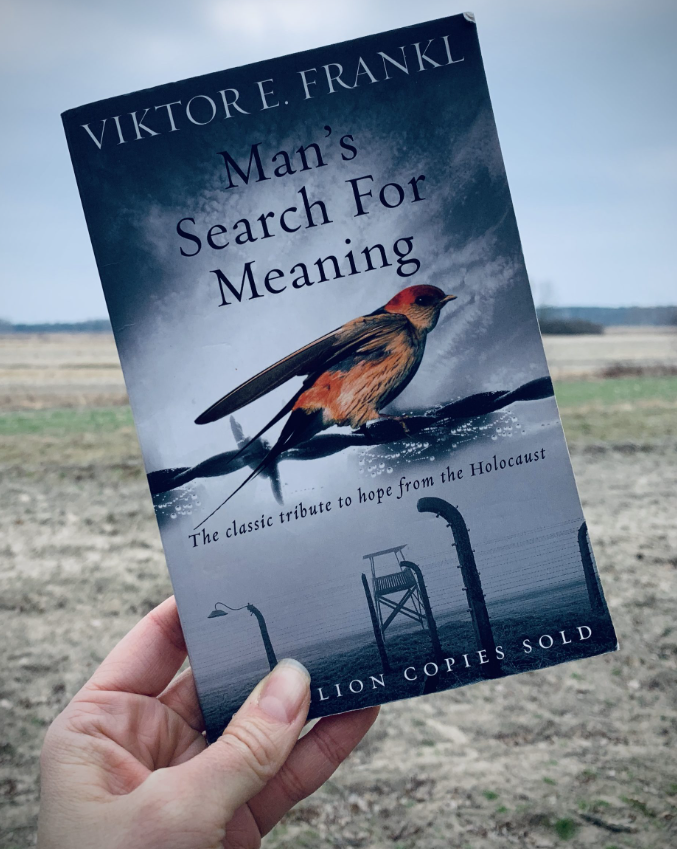

Introduction: A Memoir and Psychological Blueprint
Man’s Search for Meaning by Viktor E. Frankl is an extraordinary fusion of memoir, existential philosophy, and psychological exploration. First published in 1946, the book transcends genres, weaving Holocaust testimony with psychiatric insight. Frankl, an Austrian neurologist, psychiatrist, and Holocaust survivor, takes readers on a soul-stirring journey through Nazi concentration camps while developing his groundbreaking psychological theory—logotherapy, the belief that the primary human drive is not pleasure (as Freud argued) or power (as Adler claimed), but meaning.
In this profound narrative, Frankl is both subject and guide. The main “character” is himself—an educated Jewish man imprisoned during World War II—and his context is one of unimaginable cruelty: Auschwitz, Dachau, and other camps. Yet within this dark backdrop, Frankl offers something illuminating: hope, resilience, and the indomitable human spirit.
The Central Conflict: Surviving the Unsurvivable with Purpose
At the heart of Man’s Search for Meaning is one crucial question: How does one retain humanity, sanity, and a will to live in a world stripped of dignity and freedom?
Frankl’s core challenge is not only surviving physical brutality—starvation, forced labor, disease, and psychological torment—but also combating spiritual death, the emptiness that arises when one feels life has no purpose. He observed that those who lost faith in the future, who felt life no longer had meaning, were most likely to perish.
Through his internal battle to keep his mind alive while his body deteriorated, Frankl develops the premise that meaning can be found in even the most harrowing of circumstances.
Part I: Life in a Nazi Concentration Camp – A Psychological Account
The book is divided into two main parts. The first—about two-thirds of the text—is a detailed account of life in Nazi death camps. Frankl deliberately avoids melodrama, instead offering a clinical, restrained description of horror. His intent is not to shock but to understand the psychological reactions of prisoners.
Key Phases of Inmate Psychology
Frankl outlines three psychological phases experienced by camp inmates:
- Shock (Upon Admission): New prisoners experienced numbness and disbelief. On arrival, they were stripped, shaved, and tattooed—stripped of identity and humanity.
- Apathy (Entrenched Camp Life): Prisoners developed emotional death. Suffering became normalized, beatings were routine, and death was ever-present. Many adapted by detaching emotionally, a necessary defense mechanism.
- Depersonalization (Post-Liberation): Freedom, when it finally came, was disorienting. Many struggled to re-enter society, feeling alienated, bitter, or emotionally flat.
The Small Moments That Made Life Bearable
Despite relentless suffering, Frankl describes moments of transcendence: the sunrise glimpsed through barbed wire, a memory of his wife’s face that brought inner peace, or a piece of bread shared among inmates. These moments offered proof that meaning could still be found in beauty, love, or moral choice.
Part II: Logotherapy in a Nutshell – Finding Meaning
After surviving the camps, Frankl returned to his psychiatric practice. In the second part of the book, he introduces logotherapy, a form of existential analysis centered on the pursuit of meaning.
The Will to Meaning
Whereas Freud saw the “will to pleasure” as central and Adler emphasized the “will to power,” Frankl asserts that the “will to meaning” is the ultimate human drive. If people cannot find meaning in their lives, they suffer from what Frankl calls the “existential vacuum”—a sense of emptiness, boredom, and despair.
Three Ways to Discover Meaning
Frankl identifies three principal sources of meaning:
- Creative Work or Deeds: Engaging in meaningful tasks or creating something valuable (art, work, service).
- Experiencing Something or Someone: Love, nature, or art—relationships or experiences that move the soul.
- Attitude Toward Unavoidable Suffering: When suffering cannot be avoided, one can still choose their response—imbuing pain with purpose.
This third path is the most radical: suffering becomes meaningful when endured with dignity and courage.
Key Turning Points and Developments
Throughout the book, pivotal moments highlight Frankl’s evolving mindset:
- Clinging to Future-Oriented Thinking: Many inmates gave up on life when they lost hope. Frankl, however, envisioned his post-war lectures and manuscripts. “He who has a why to live can bear almost any how,” he writes, echoing Nietzsche.
- Love as a Redemptive Force: Frankl’s mental conversations with his wife (who, unbeknownst to him, had died) provided spiritual strength. In love, he saw the ultimate and highest goal humans can aspire to.
- Choice in Suffering: While external circumstances were controlled by the SS, Frankl realized his internal world was his own. He writes, “Everything can be taken… but one thing: the last of the human freedoms—to choose one’s attitude.”
Major Themes and Messages
1. Meaning is the Antidote to Despair
Frankl’s central theme is that meaning sustains us, especially through hardship. When people understand why they suffer, they can endure more than they imagined.
2. Freedom of Inner Choice
Even when every liberty is stripped away, man still has freedom over his inner world. Frankl calls this “the last of the human freedoms”—the power to choose one’s response.
3. The Human Capacity for Resilience
Man’s Search for Meaning is a testament to psychological resilience. Frankl’s tone is not bitter or angry; it is hopeful. He invites us to rise above circumstance and take responsibility for our spiritual well-being.
4. Responsibility Over Happiness
Rather than seeking happiness directly, Frankl urges us to seek meaning and responsibility. Happiness ensues as a byproduct of living meaningfully.
Practical Lessons and Takeaways
- Shift from Victimhood to Responsibility: We can’t always control what happens, but we can control how we respond. This is the ultimate empowerment.
- Cultivate a Future Vision: When enduring hardship, holding onto a future goal—a reunion, a mission, a project—can keep your spirit alive.
- Value Every Moment: Even mundane or painful moments can be spiritually rich if approached with awareness and presence.
- Do Not Avoid Suffering—Transform It: Avoiding discomfort at all costs can leave us hollow. Meaning often arises through pain.
- Practice Love and Empathy: Connection is sacred. Love, even when it cannot be physically expressed, elevates and empowers.
Why Man’s Search for Meaning Still Matters
Nearly 80 years after its first publication, Man’s Search for Meaning remains a beacon in modern psychology and philosophy. It’s recommended by therapists, executives, educators, and spiritual leaders alike. Why? Because everyone, at some point, confronts suffering, and Frankl offers a roadmap through it—not by avoiding the pain, but by making it meaningful.
Frankl’s insights are especially poignant in today’s world, where depression, anxiety, and feelings of emptiness are on the rise. His voice, calm and assured, reminds us that even in chaos, we are not powerless.
Final Thoughts: A Book Worth Owning
Man’s Search for Meaning is not just a book—it’s a guide, a companion, and a challenge. It will move you, unsettle you, and ultimately, inspire you to look within for the courage to endure and the will to contribute meaningfully to life.
Whether you’re facing personal adversity, seeking direction, or simply trying to live more consciously, Viktor Frankl’s words will stay with you long after the final page.
Where to Get It:
You can purchase Man’s Search for Meaning online at major bookstores such as Amazon, Barnes & Noble, or your local independent bookstore. It’s available in print, eBook, and audiobook formats.