Mystery/Thriller Review
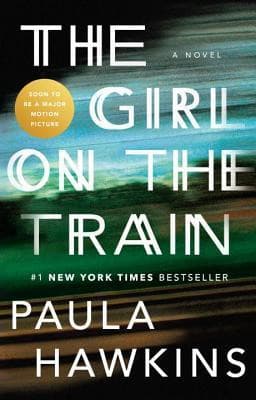
The Girl on the Train
by Paula Hawkins
TL;DR
Rachel watches a couple from her daily commuter train, builds a fantasy life for them, and then sees something from the window that pulls her directly into the woman's disappearance. The Girl on the Train helped define the wave of unreliable-narrator domestic thrillers that followed it, and the central device — an alcoholic narrator whose memory can't be fully trusted — still holds up as the book's sharpest asset.
What Is The Girl on the Train About?
Rachel, divorced and drinking heavily, rides the same commuter train every day past her old house, now occupied by her ex-husband and his new wife, and past a house a few doors down where she's invented an idealized life for a couple she's never met. When that woman, Megan, goes missing, Rachel realizes she may have seen something important the night before — if only she could remember it clearly. The novel alternates between Rachel, Megan, and Anna (Rachel's ex's new wife), each an unreliable witness in a different way.
Who Should Read It?
This is the reference point for readers who want to understand where the current wave of unreliable-narrator, multi-POV domestic thrillers came from. It's a strong entry point for readers newer to the genre, and still effective for genre veterans who haven't revisited the book that kicked off the trend.
Strengths
Rachel's alcoholism isn't just a character trait, it's the engine of the plot — her memory gaps create genuine, structural uncertainty rather than artificial withholding, which is a harder trick than it looks. The three-narrator structure is edited with real precision, doling out contradictions at a pace that keeps each new perspective recontextualizing what came before.
Weaknesses
The middle third loses momentum once readers have a rough sense of where the mystery is headed, before the final act picks the pace back up. Anna and Megan, while structurally necessary, are both thinner as voices than Rachel, whose damaged perspective carries most of the book's best material.
Verdict
The Girl on the Train remains a well-built thriller in its own right, and essential reading for understanding the genre wave it set off.
Disclosure: Ink Reservoir is reader-supported. When you buy through links on our site, we may earn an affiliate commission at no extra cost to you. As an Amazon Associate we earn from qualifying purchases.
Check price on Amazon