

Introduction
What drives someone to abandon everything—comfort, convention, and even compassion—in pursuit of perfection? Steve Jobs was that person. His story is not one of a traditional hero or a feel-good entrepreneur who played by the rules. Instead, it’s the compelling, sometimes disturbing tale of a man whose relentless obsession with connecting creativity and technology fundamentally changed how the world communicates, creates, and consumes.
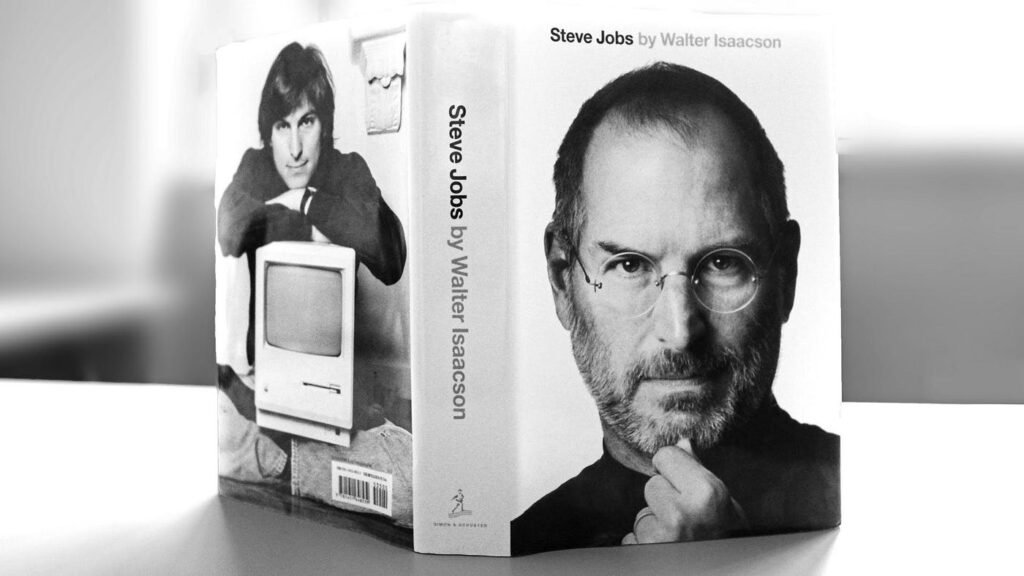
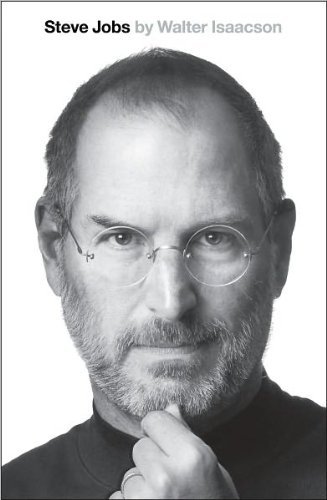
Steve Jobs by Walter Isaacson is the exclusive, authorized biography of the Apple founder—a book that reveals both the genius and the darkness that existed in Jobs’s complex personality. Based on more than forty interviews with Jobs himself and over a hundred conversations with his family, friends, competitors, and colleagues, Isaacson crafted a riveting narrative that explores how one man’s passion for perfection revolutionized six entire industries: personal computers, animated movies, music, phones, tablet computing, and digital publishing. If you’re looking for a book review of Steve Jobs or searching for key takeaways from Steve Jobs, this definitive biography delivers an unflinching, honest portrait of an icon.
The Core Story: From Abandoned Child to Tech Visionary
A Life Built on Contradiction
The biography opens with a paradox that would define Jobs’s entire existence: he was abandoned at birth, yet made to feel chosen. Born on February 24, 1955, to an unmarried graduate student named Joanne Schieble and a Syrian-born political science doctoral candidate named Abdulfattah “John” Jandali, Steve was adopted by Paul and Clara Jobs—a high school dropout mechanic and a bookkeeper. This adoption became the emotional scaffolding of his life. “I remember running into the house, crying,” Jobs recalled of a childhood moment when a neighbor suggested his adoptive parents didn’t want him. His parents sat him down and explained: “We specifically picked you out.” That distinction between being abandoned and being chosen would haunt and motivate him for decades.
This fundamental sense of abandonment left scars that Isaacson carefully documents. Jobs himself would later father and abandon a child at age twenty-three, a wound that took years to heal. Yet this same abandonment also fostered an independence and a fierce determination to prove himself. “He wants to control his environment, and he sees the product as an extension of himself,” explained longtime colleague Del Yocam. The desire for control that would characterize Jobs’s leadership—sometimes brilliantly, often brutally—can be traced directly to this childhood wound.
Silicon Valley Genesis
The book situates Jobs’s formative years within the explosive birth of Silicon Valley itself. In the 1950s and 1960s, when Jobs was growing up in Mountain View, California, the region was transforming from apricot orchards into a technological epicenter. Military contractors, defense companies, and the nascent semiconductor industry created an ecosystem of innovation unlike anywhere else on Earth. Isaacson captures how Jobs absorbed this environment like osmosis—the mystery, the high-tech allure, the sense that brilliant minds were bending the rules of what was possible.
His father, Paul Jobs, taught him something equally valuable: the philosophy of hidden craftsmanship. “He loved doing things right. He even cared about the look of the parts you couldn’t see,” Jobs recalled of the fence his father built. This lesson—that quality and design matter even in places customers would never see—became the DNA of Apple’s product philosophy. The biography reveals how Jobs’s aesthetic sensibility was forged in his father’s garage, observing the design details of custom cars, the precision of mechanical engineering, and the marriage of form and function.
The Meeting That Changed Everything
One of the most pivotal moments in tech history gets its due in Isaacson’s account: the meeting between Steve Jobs and Steve Wozniak. Though Wozniak was almost five years older, they were introduced by a mutual friend, Bill Fernandez. “Steve and I just sat on the sidewalk in front of Bill’s house for the longest time,” Wozniak remembered, “just sharing stories—mostly about pranks we’d pulled.” They were a study in complementary opposites. Wozniak was the brilliant, humble hardware engineer who felt called to make elegant designs with the fewest possible chips. Jobs was the charismatic, ambitious promoter who understood that great technology meant nothing without great marketing and presentation. Together, they would become unstoppable.
The Journey of Radical Choices
The early chapters of Steve Jobs biography by Walter Isaacson trace Jobs’s formative years with remarkable intimacy. His time at Reed College, where he dropped out but continued attending classes, exposed him to calligraphy, Zen Buddhism, and the counterculture of the early 1970s. He traveled to India seeking spiritual enlightenment. He experimented with LSD and embraced vegetarianism with an intensity that bordered on obsession. He even considered becoming a Buddhist monk. Yet beneath all this spiritual searching was a geek—someone who devoured technical journals, built electronics with his friend Wozniak, and dreamed of creating products that would merge art and science.
The Apple Era: Ambition, Innovation, and the Reality Distortion Field
From Garage to Global Impact
Jobs and Wozniak founded Apple Computer Company in 1976 in a garage in Los Altos, California, with their friend Ron Wayne as the third co-founder (who foolishly decided to forgo his equity stake). The Apple I, designed almost entirely by Wozniak with Jobs handling the business side, was a revelation. But it was the Apple II—a complete, user-friendly personal computer in an elegant case—that changed everything. Isaacson captures how Jobs obsessed over every detail: the color of the plastic, the shape of the keyboard, the feel of turning it on. He wanted ordinary people to use computers, not just engineers.
What makes the book review of Steve Jobs essential reading is how Isaacson documents the “Reality Distortion Field”—the term his colleagues used to describe Jobs’s uncanny ability to bend reality through sheer force of will and conviction. He could convince people that the impossible was not only possible but inevitable. He could walk into a meeting and declare that a project that should take a year could be done in six months—and somehow, his team would find a way to make it happen, driven by his infectious belief in the product’s destiny.
The Philosophy of Simplification
One of the most profound insights in Isaacson’s biography is Jobs’s philosophy of design: “Real artists simplify.” This wasn’t just aesthetic preference—it was a fundamental principle about how to serve customers. Jobs believed that the best products were those that removed unnecessary complexity and presented elegant solutions to real problems. The Macintosh, launched in 1984, embodied this philosophy through its graphical user interface, a technology that Jobs had famously “borrowed” from Xerox’s research labs, yet transformed into something magical. The biography doesn’t shy away from this contradiction: Jobs was not an inventor in the traditional sense. He was a curator, a perfectionist, and a visionary who understood how to synthesize existing technologies into products that felt revolutionary.
The Darker Side of Genius
Yet Isaacson’s biography is unflinching in documenting Jobs’s cruelty, his petulance, and his capacity for destruction. He could be devastatingly harsh in meetings, humiliating talented engineers with casual brutality. He made promises he didn’t keep. He could be coldly indifferent to the emotional needs of those around him. His first girlfriend, Chrisann Brennan, said that being abandoned at birth left Jobs “full of broken glass.” The biography captures how this pain manifested in his relationships—his difficulty with sustained intimacy, his tendency to run away when things became too real.
The most consequential example was his relationship with his daughter Lisa. When his then-girlfriend Chrisann Brennan became pregnant in 1978, Jobs was devastated and angry. For years he denied paternity and contributed little to raising the child, though he later took responsibility and Lisa became part of his life. This wasn’t a moment he was proud of, as he acknowledged to Isaacson. But it revealed a man whose drive for perfection in products didn’t translate to perfection in his personal life—and who sometimes couldn’t integrate the different parts of himself into a coherent whole.
The Wilderness Years and the Return
Exile and Reinvention
The biography’s turning point comes with Jobs’s ouster from Apple in 1985—a moment that Isaacson explores with nuance and sympathy. Jobs had recruited John Sculley from Pepsi to run the company, using the famous line, “Do you want to sell sugar water for the rest of your life, or do you want to come with me and change the world?” But Sculley eventually turned against him, and the Apple board chose the CEO over the co-founder. It was a devastating blow—Jobs felt betrayed, abandoned once again.
Yet this exile proved transformative. Jobs founded NeXT Computer, which, while commercially unsuccessful, became a laboratory for his evolving philosophy about how computers should work. More importantly, he acquired what would become Pixar, initially just a small computer graphics division of Lucasfilm. This is where Isaacson’s biography becomes almost poetic. Jobs invested hundreds of millions into Pixar during years when it seemed like a financial black hole. But he believed in the vision—that computer graphics would revolutionize animation. When Pixar released Toy Story in 1995, it vindicated his faith completely. The movie was a phenomenon, and Pixar became one of the most successful animation studios ever. Through Pixar, Jobs learned lessons about storytelling, about the power of merging art and technology, and about the kind of creative culture he wanted to build.
The Second Coming
When Jobs returned to Apple in 1997, the company was on the brink of collapse. The board hired him as “interim” CEO (a role that would last thirteen years). Isaacson captures this moment with dramatic flair—how Jobs walked back into the building, looked at the product line, and declared, “This is bullshit.” The company had lost its way. Under his direction, Apple would launch the iMac, iTunes, the iPod, the iPhone, and the iPad—products that would transform industries and establish Apple as the world’s most valuable company.
What emerges from reading this biography is that Jobs’s second era at Apple was marked by a philosophical shift. He had learned patience. He had learned to delegate to brilliant designers like Jonathan Ive. He had learned that sometimes the best way to control outcomes was not to micromanage, but to set a clear vision and trust exceptional people to execute it. The design principles he and Ive developed—simplicity, elegance, the integration of hardware and software—became the template for Apple’s success.
Why You Should Read Steve Jobs by Walter Isaacson
For the Ambitious and the Curious
This book is essential reading for anyone interested in innovation, entrepreneurship, or leadership. If you’ve ever wondered how someone builds products that billions of people use daily, or how to translate vision into reality, this biography offers invaluable lessons. Jobs’s approach to product design, marketing, and company culture has become the gold standard in Silicon Valley and beyond. Yet Isaacson doesn’t present him as a simple genius to be emulated. Instead, he shows Jobs as a flawed, often difficult human being whose personal struggles and spiritual searching were inseparable from his professional achievements.
For Readers Seeking Depth and Honesty
This is not a hagiography. Isaacson, one of America’s greatest biographers (he previously wrote definitive lives of Benjamin Franklin and Albert Einstein), had complete access to Jobs and promised editorial independence. Jobs asked for no control over the narrative and encouraged people to speak honestly about his failings. The result is a biography with remarkable depth and complexity. You’ll find yourself sympathizing with Jobs one moment and recoiling from his cruelty the next. You’ll see how his obsession with perfection created extraordinary products and also left human wreckage in its wake.
The Tone: Intimate Yet Epic
Isaacson’s prose brings Jobs to life on the page. Whether he’s describing the meticulous details of a product launch, the spiritual searching of a young man in India, or the sharp sting of betrayal, the writing has rhythm and emotional resonance. This is biography as narrative art. You can almost feel the tension in the room when Jobs confronts a designer about a font choice, or the electricity of a pitch meeting where he’s trying to convince someone to join his vision. For readers who loved Becoming or Shoe Dog, this book delivers the same intimate, compelling storytelling.
Key Lessons from Steve Jobs
Several themes emerge repeatedly throughout the biography that make it valuable to modern readers:
The intersection of technology and humanities is where magic happens. Jobs’s emphasis on the liberal arts, his study of calligraphy and design history, his love of music and literature—these weren’t distractions from his tech work. They were essential to it. The most innovative companies, Isaacson suggests, are those that understand both the engineering and the human experience.
Simplicity requires tremendous complexity. Jobs’s famous mantra that “real artists simplify” wasn’t just about aesthetics. It was a philosophy that required ruthless prioritization, deep technical understanding, and an absolute commitment to user experience. The products that seemed simple were often the result of years of iteration and refinement.
Intuition is as important as analysis. Jobs trusted his gut. He believed that intuitive understanding was more significant than abstract thinking. In a world increasingly dominated by data and metrics, his approach remains radically countercultural—and increasingly relevant.
Culture is strategy. Jobs understood that a company’s products reflected its culture. He hired people who shared his passion for excellence. He created spaces and rituals that reinforced the values he cared about. This cultural obsession became Apple’s greatest competitive advantage.
Final Reflection
Reading Steve Jobs is an experience that stays with you. You’ll find yourself re-examining your own relationship to technology, creativity, and ambition. You’ll see how a single human being, for all his flaws and contradictions, can reshape entire industries. You’ll understand why he remains, years after his death, a figure of fascination and inspiration.
Isaacson closes the biography with a reflection on Jobs’s legacy and his final years, battling cancer while continuing to innovate. It’s both heartbreaking and inspiring—a reminder that Jobs’s drive for perfection was inseparable from his humanity. He was not a perfect man, but he was a remarkable one.
Call to Action
If this story of ambition, innovation, and the relentless pursuit of excellence speaks to you, it’s time to experience the full journey yourself. Grab your copy of Steve Jobs by Walter Isaacson today on Amazon! Whether you’re an entrepreneur seeking inspiration, a student of design and innovation, or simply someone who wants to understand one of the most influential figures of our time, this biography is essential reading.