
Have You Ever Felt Like Your Body Remembers What Your Mind Tries to Forget?
There’s a reason why nightmares jolt us awake years after the event has passed. There’s a reason why certain smells, sounds, or touches can send us spiraling into panic, even when we’re perfectly safe. Our bodies, it turns out, are storytellers—keeping meticulous records of every hurt, every fear, every moment we felt helpless or alone.
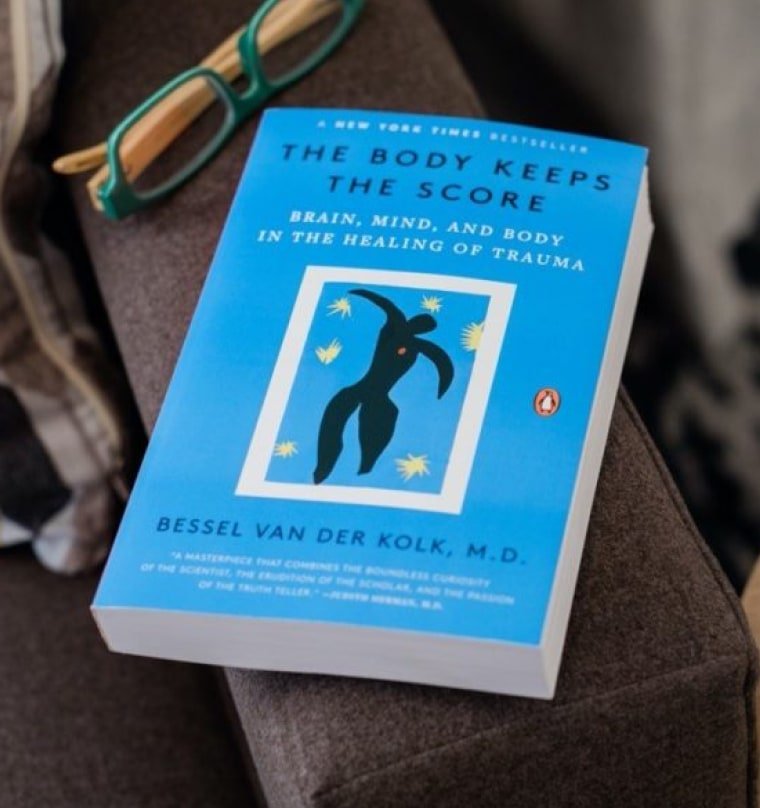
Dr. Bessel van der Kolk’s The Body Keeps the Score: Brain, Mind, and Body in the Healing of Trauma isn’t just another self-help book gathering dust on your nightstand. Published in 2014, this groundbreaking work has spent over 355 weeks—nearly seven years—on the New York Times bestseller list, with millions of copies sold worldwide and translations in 36 languages. Why? Because it speaks to something universal and achingly human: the invisible scars we carry and our desperate need to understand them.
The Hidden Architecture of Trauma
Van der Kolk, a psychiatrist who has dedicated over four decades to studying traumatic stress, opens with a startling revelation: trauma fundamentally reorganizes the way our minds and brains manage perception. It’s not just about having bad memories. Trauma actually changes how we think, what we think about, and even our very capacity to think clearly.
The book begins with van der Kolk’s work at a Boston Veterans Administration Clinic in the late 1970s, where he encountered Tom, a Vietnam veteran whose life had become a living memorial to his fallen comrades. Tom had a successful law practice and a picture-perfect family, but inside, he felt dead. His nightmares were so horrific that he dreaded sleep. Loud noises sent him into uncontrollable rages. He couldn’t feel genuine affection for his wife, even though her letters had kept him alive during the war.
Through Tom and countless other patients, van der Kolk discovered that trauma survivors aren’t just haunted by the past—they’re biologically stuck there. Their smoke detectors (the amygdala in the brain) have been rewired to interpret certain situations as life-threatening danger, sending urgent signals to fight, freeze, or flee. The past is alive in the form of gnawing interior discomfort, visceral warning signs that never subside.
But here’s the revelation that makes this book essential: these reactions aren’t signs of weakness or moral failing. They’re caused by actual, measurable changes in the brain.
When the Body Becomes the Battlefield
One of the book’s most profound insights is captured in its title. Van der Kolk explains how traumatic memories are stored differently than ordinary memories. While we can usually talk about difficult experiences and integrate them into the narrative of our lives, traumatic memories remain frozen—undigested, raw, and ready to hijack us at any moment.
The book introduces us to patients like Sherry, a woman so disconnected from her body due to childhood neglect that she would pick at her skin until it bled, just to feel something, anything at all. Or Bill, a Vietnam veteran who, while watching his newborn baby, suddenly became flooded with unbearable images of dying children he’d seen during the war—images so vivid they felt like hallucinations.
Van der Kolk explains the neuroscience behind these experiences with remarkable clarity. When we’re traumatized, the parts of our brain responsible for speech and self-awareness go offline, while the fear centers light up like fire alarms. This is why traumatized people often can’t find words to describe what they’re feeling—their physical sensations become the only language their bodies know.
The statistics he shares are sobering. One in five Americans was sexually molested as a child. One in four was beaten by a parent to the point of leaving marks. One in three couples engages in physical violence. Trauma, van der Kolk argues, isn’t rare—it’s epidemic.
Revolutionary Paths to Recovery
What sets The Body Keeps the Score apart from other trauma literature is van der Kolk’s refusal to accept that suffering is permanent. The second half of the book introduces a range of innovative treatments, many of which work not by talking about trauma but by helping people reclaim ownership of their bodies.
He explores Eye Movement Desensitization and Reprocessing (EMDR), a therapy that uses bilateral eye movements to help the brain process traumatic memories. In van der Kolk’s own research, 60% of patients who received eight weeks of EMDR were completely cured of PTSD symptoms—and remained so eight months later, unlike those treated with medication who relapsed when they stopped taking pills.
The book also champions yoga as a powerful tool for trauma recovery. Van der Kolk describes how his Trauma Center developed specialized yoga programs for trauma survivors, teaching them to notice physical sensations without judgment and to rebuild a caring relationship with their bodies. For people who have learned to fear their own physical sensations, this is nothing short of revolutionary.
Other innovative approaches include neurofeedback (training the brain to produce healthier electrical patterns), Internal Family Systems therapy (learning to work with different “parts” of ourselves), and even theater programs that help traumatized people literally act out new endings to their stories.
The thread connecting all these treatments is simple yet profound: healing happens when we can safely experience what we’ve been running from. The body must learn that the danger has passed. We must move from being haunted by the past to being fully present in our lives.
Why You Should Read This Book Today
The Body Keeps the Score isn’t easy reading. Van der Kolk doesn’t shy away from the darkness—the case studies can be heartbreaking, the descriptions of human cruelty difficult to bear. But within these pages is something rare and precious: hope grounded in science.
This book is for trauma survivors who’ve felt like they’re broken beyond repair. It’s for therapists searching for more effective ways to help their clients. It’s for anyone who has ever wondered why they react the way they do, why they can’t “just get over” something that happened years ago, why their body seems to have a mind of its own.
Van der Kolk writes with the wisdom of someone who has spent a lifetime listening to pain, but also with the conviction that recovery is possible. He shows us that trauma doesn’t have to be a life sentence. With the right tools—whether that’s EMDR, yoga, neurofeedback, or somatic therapy—people can rewire their brains, release what’s been trapped in their bodies, and reclaim their lives.
As one reviewer beautifully put it, this book helps us understand that “only through fostering self-awareness and gaining an inner sense of safety will we, as a species, fully experience the richness of life”.
The body does keep the score. But the score can be rewritten.
Ready to Begin Your Healing Journey?
If The Body Keeps the Score speaks to your experience—if you’ve ever felt trapped by invisible wounds or wondered why you can’t seem to feel safe in your own skin—this book offers both understanding and a roadmap forward.
Grab your copy of The Body Keeps the Score by Bessel van der Kolk today on Amazon!

Whether you’re just beginning to understand your trauma or you’ve been searching for years for answers, this book has the potential to transform how you see yourself and your path to healing. You deserve to feel whole. You deserve to live fully in the present. This book can show you the way.