Non-fiction Review
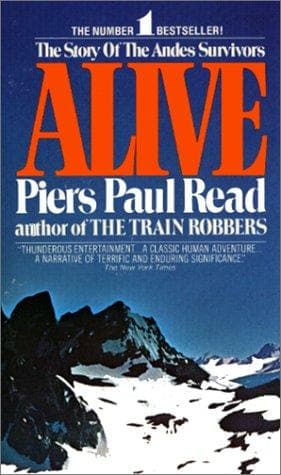
Alive: The Story of the Andes Survivors
by Piers Paul Read
TL;DR
In 1972, a plane carrying a Uruguayan rugby team crashed high in the Andes; the survivors endured 72 days at extreme altitude with no food, ultimately resorting to eating the bodies of the dead to stay alive until rescue. Alive remains the definitive account of the ordeal, written with direct access to the survivors and unusual moral seriousness about the hardest decision they faced.
What Is Alive About?
Read reconstructs the crash and the survivors' ordeal in the Andes in granular detail, drawing on direct interviews with the survivors themselves to trace both the physical mechanics of survival — building shelter, managing dwindling resources, the eventual trek out to find rescue — and the psychological and spiritual reckoning the group went through as their options narrowed to an impossible choice. The book treats that choice, and the survivors' own religious and moral framing of it, with real seriousness rather than using it as a shock element.
Who Should Read It?
This is essential reading for anyone drawn to true survival narratives, and it remains the primary source most later adaptations and retellings draw from. It rewards readers who want the actual reported detail behind a story that's often reduced to a single shocking headline.
Strengths
Read's direct access to the survivors gives the account real authority — this isn't secondhand reconstruction but a narrative built from the people who actually lived through it. The book's handling of the survivors' decision to eat the dead is genuinely notable for its moral seriousness, presenting their own religious and ethical reasoning rather than treating the decision as sensational content.
Weaknesses
Read's restrained, journalistic prose prioritizes factual accuracy over narrative flourish, which some readers may find less immersive than a more novelistic treatment of the same events. Because the book covers a large group of survivors, some individuals get less interior development than readers wanting deeper personal insight might want.
Verdict
Alive remains the standard account of one of history's most extraordinary survival stories — sober, well-reported, and morally serious about a decision most retellings only sensationalize.
Disclosure: Ink Reservoir is reader-supported. When you buy through links on our site, we may earn an affiliate commission at no extra cost to you. As an Amazon Associate we earn from qualifying purchases.
Check price on Amazon