Non-fiction Review
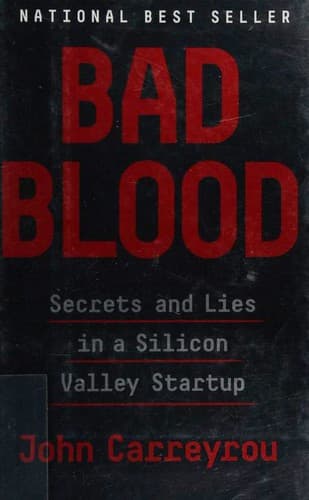
Bad Blood: Secrets and Lies in a Silicon Valley Startup
by John Carreyrou
TL;DR
Theranos promised to revolutionize blood testing with technology that never actually worked, while raising billions and endangering patients on faked results. Bad Blood is written by the Wall Street Journal reporter whose own investigation broke the story, and it remains the definitive, meticulously sourced account of how the fraud operated and how it finally collapsed.
What Is Bad Blood About?
Carreyrou traces Theranos from Elizabeth Holmes's Stanford dropout origin story through the company's rise to a $9 billion valuation on the promise of a blood-testing device that could run hundreds of tests from a single finger-prick — a technology that, as Carreyrou's reporting and the book document in granular detail, never actually worked reliably, while the company continued running real patient tests on faulty results and aggressively silenced employees who raised concerns.
Who Should Read It?
This is essential reading for anyone interested in startup culture, corporate fraud, or Silicon Valley's "fake it till you make it" mythology taken to its most consequential extreme. It works particularly well for readers who want a case study in how institutional pressure and charismatic leadership can suppress internal dissent for years.
Strengths
Carreyrou's own reporting is the story, and that firsthand vantage gives the book sourcing depth few other business books can match — he spoke to dozens of former employees who risked professional and legal retaliation to talk. Despite most readers knowing the broad outcome, the book maintains real tension by documenting the specific mechanisms of the fraud and the courage it took individual whistleblowers to expose it.
Weaknesses
The large cast of former Theranos scientists, executives, and employees can blur together across the book's full timeline without careful tracking. Elizabeth Holmes herself remains somewhat opaque as a psychological subject — an inevitable consequence of the access Carreyrou had, but a real gap for readers wanting deeper insight into her own self-understanding.
Verdict
Bad Blood remains the standard text on the Theranos scandal — rigorously reported, genuinely tense, and damning in a way that earns every bit of its reputation.
Disclosure: Ink Reservoir is reader-supported. When you buy through links on our site, we may earn an affiliate commission at no extra cost to you. As an Amazon Associate we earn from qualifying purchases.
Check price on Amazon