Literary Fiction Review
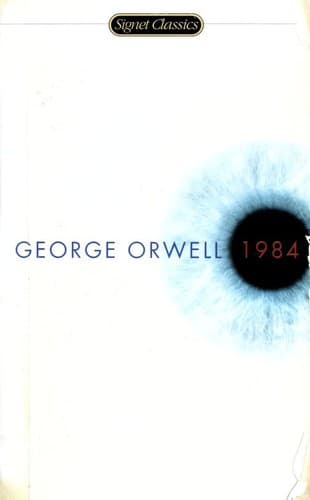
1984
by George Orwell
TL;DR
Winston Smith works for the Party rewriting history to match whatever the Party currently claims is true, while quietly hating the regime that employs him. 1984 remains the reference point for dystopian fiction not because of its plot but because of its vocabulary — doublethink, Newspeak, Big Brother — which is still the sharpest available language for describing how authoritarian systems manufacture consent.
What Is 1984 About?
In a Britain absorbed into the totalitarian superstate Oceania, Winston Smith's job is altering historical records so the past always aligns with the Party's current position. He begins a forbidden affair with Julia and a quiet flirtation with rebellion, drawn toward a supposed resistance movement — only to discover how completely the Party has anticipated and engineered even the shape of dissent itself.
Who Should Read It?
Anyone who wants the source text behind the terms and mechanics that now describe real-world surveillance and propaganda — this is the book that gave the genre its working vocabulary. Readers who've mostly encountered the ideas secondhand (through cultural references rather than the novel itself) will find the actual mechanics sharper and more specific than the shorthand suggests.
Strengths
Orwell's central insight — that a regime secure enough doesn't need to hide its cruelty, because it can make cruelty itself the object of forced love — is delivered with clinical precision in the interrogation sequences, which remain some of the most effective psychological horror in the genre. The novel's tracking of Winston's actual, granular unraveling, not just the fact of his defeat, gives the ending its force.
Weaknesses
The long embedded excerpt from Goldstein's book, while thematically important, is a genuine pacing stop that many readers skim or struggle through. Julia is written mostly in relation to Winston's psychology rather than as a fully realized character in her own right, which is a real gap for a novel this attentive to interiority elsewhere.
Verdict
1984 isn't dated so much as absorbed — its vocabulary is now how we talk about the thing it warned about, which is the clearest evidence of how exactly it got the mechanics right.
Disclosure: Ink Reservoir is reader-supported. When you buy through links on our site, we may earn an affiliate commission at no extra cost to you. As an Amazon Associate we earn from qualifying purchases.
Check price on Amazon