Literary Fiction Review
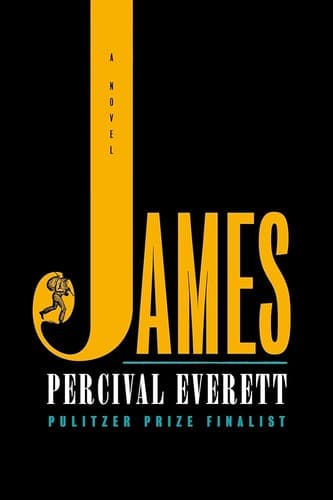
James
by Percival Everett
TL;DR
Percival Everett retells Adventures of Huckleberry Finn from Jim's point of view, revealing a man who speaks two languages — the broken dialect white people expect, and the precise, literate voice he actually thinks in. James won the 2024 National Book Award, and it earns the acclaim by making that gap between performance and interiority the entire engine of the novel.
What Is James About?
Jim — James, as he refers to himself — is enslaved in pre-Civil War Missouri and, on learning he's about to be sold away from his family, flees along the Mississippi with Huck Finn, a white boy running from his own troubles. Everett follows Twain's original plot closely enough that the novel functions as a real companion piece, but the vantage point shift changes everything: what reads as comic misadventure in Twain becomes, from James's side, a calculated performance of ignorance staged for survival, layered over a man who reads Voltaire in his head and code-switches into minstrel-show dialect the instant a white person appears.
Who Should Read It?
This rewards readers who know Huckleberry Finn well enough to feel the reframing land scene by scene, though it works as a standalone novel too. It's for readers who want literary fiction that takes real formal risks with voice and structure rather than playing it safe with a familiar premise.
Strengths
The dual-voice device — James's fluent internal narration against the "slave speech" he performs for white characters — is handled with total control, and it does more to dramatize the violence of erasure than pages of exposition could. Everett also builds genuine tension even for readers who know exactly where the river journey goes, because the real question isn't what happens next in the plot, it's what James is thinking while it happens.
Weaknesses
The back half of the novel takes some turns into territory more melodramatic than the rest of the book's controlled irony, and a couple of late reveals feel engineered rather than earned. Readers unfamiliar with Twain's original will still follow the story, but will lose some of the specific, scene-by-scene irony of the reframing.
Verdict
James does what the best response-novels do: it doesn't just critique its source material, it makes the source material impossible to read the same way again.
Disclosure: Ink Reservoir is reader-supported. When you buy through links on our site, we may earn an affiliate commission at no extra cost to you. As an Amazon Associate we earn from qualifying purchases.
Check price on Amazon