Non-fiction Review
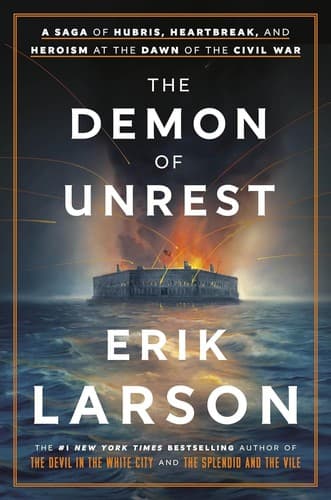
The Demon of Unrest
by Erik Larson
TL;DR
Erik Larson narrows in on the five months between Abraham Lincoln's election and the shelling of Fort Sumter, tracking the specific decisions, miscalculations, and personalities that turned secession from possibility into inevitability. The Demon of Unrest applies Larson's trademark narrative-nonfiction tension to a story whose outcome everyone already knows, and makes it feel newly uncertain anyway.
What Is The Demon of Unrest About?
Larson follows the tense standoff at Fort Sumter, where a small garrison of Union soldiers held out against surrounding Confederate forces while political leaders on both sides maneuvered toward — or occasionally away from — open war. Drawing heavily on diaries, letters, and firsthand accounts from figures across the political spectrum, the book reconstructs the day-by-day decisions and miscommunications of the months between Lincoln's election and the first shots of the Civil War.
Who Should Read It?
Readers who want narrative history that reads with real momentum, rather than a dense academic treatment, will find this an accessible entry point into the Civil War's opening moments. It works well for readers already broadly familiar with the war's outcome who want the granular, human-scale story of how it actually began.
Strengths
Larson's use of diaries and personal letters gives major historical figures — on both sides of the growing conflict — genuine interior texture rather than treating them as symbols of their positions. The Fort Sumter standoff itself is rendered with scene-by-scene, almost cinematic detail that makes a famous historical set piece feel freshly tense rather than inevitable.
Weaknesses
The book's large cast of political, military, and diplomatic figures requires careful attention to track across the full five-month timeline. Readers wanting deeper analysis of slavery's economic and moral dimensions, rather than the narrative of political maneuvering, may want to pair this with a more argument-driven history.
Verdict
The Demon of Unrest proves Larson can apply his narrative-nonfiction craft to genuinely consequential history without losing any of the tension that's made his other books bestsellers.
Disclosure: Ink Reservoir is reader-supported. When you buy through links on our site, we may earn an affiliate commission at no extra cost to you. As an Amazon Associate we earn from qualifying purchases.
Check price on Amazon